
What Davos Still Misses About African Innovation

The 2026 World Economic Forum has just concluded in Davos, Switzerland, under the theme “A Spirit of Dialogue.” According to the official reports, the meeting sought to encourage collaboration across geopolitical, economic, and technological divides in response to shared global challenges. At Davos, leaders agreed that Africa's growth must be innovation-led. In that same spirit, this article foregrounds innovation dialogues that were largely absent from Davos, especially those emerging from African contexts where innovation is driven by resource-constraint and necessity across Africa's informal sectors.
The 56th edition of the World Economic Forum did more than many previous meetings to foreground Africa and the Global South. Official reporting highlighted record participation by African heads of state, senior ministers, and private sector leaders. Digital transformation featured prominently, framed as a pathway toward inclusive economic growth. However, the discussions paid limited attention to the African innovatoion that already responding to these changes, including data scientists, education technology entrepreneurs extending learning through basic digital tools, and fintech pioneers expanding access to financial services. Any credible dialogue on innovation, economic growth, and the future of work in Africa must engage more directly with this gap between global narratives and lived practice.
Recent research has shown that Africa is expected to account for close to 40% of the world’s working-age population by 2050, however, the continent currently attracts less than 3% of global foreign direct investment and under 1% of global R&D spending. These disparities shape who is recognised as an innovator and whose work is treated as scalable or investable. Over time, it has become clear that African innovations are frequently acknowledged in aggregate terms, while the knowledge produced through lived experimentation and resource constraint-driven design remain mostly undervalued. Global dialogues like the ones in Davos last week, continue to privilege forms of innovation associated with high tech innovations, capital intensity and formal research ecosystems. This bias persists despite clear evidence of asymmetry.
On the ground, more than 80% of employment in Africa remains in the informal sector, and much innovation emerges within this space. As a result, innovation across large parts of African economies follows a different logic, shaped by constraint, adaptation, and everyday problem-solving rather than formal research pipelines or venture-backed growth. Ofcourse this does not mean that innovation is confined to informality. There are other models that blend the informal and state-led models that are emerging on the continent.
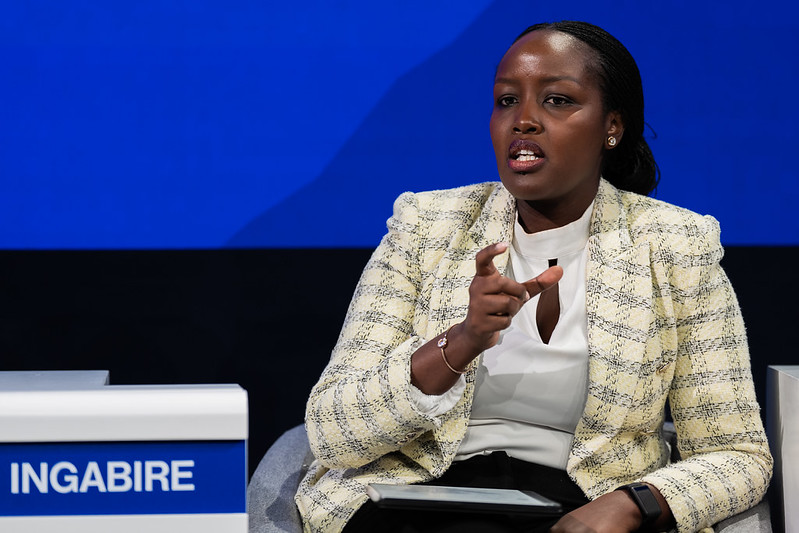
At Davos, the Rwandan Minister of ICT and Innovation, Paula Ingabire, highlighted the use of drones and artificial intelligence to strengthen national health systems and extend services to underserved rural populations. Rwanda’s experience is a perfect example of how state-led innovation can effectively integrate advanced technologies into public service delivery.
Despite their proven usefulness, many of the innovations already happening in Africa struggle to attract sustained global investments and long-term support. Global funding models often expect growth patterns similar to those seen in Silicon Valley, while development approaches still tend to view African innovation as something that depends on external guidance rather than local expertise. This disconnect reduces opportunities for learning on all sides. Innovations developed under conditions of scarcity offer valuable lessons in efficiency, adaptability, and inclusion that are increasingly relevant well beyond the continent.
Africa is expected to account for close to 40% of the world’s working-age population by 2050, yet the continent currently attracts less than 3% of global foreign direct investment and under 1% of global R&D spending.
What Davos largely missed was not Africa’s potential, but Africa’s present. Innovation is already shaping livelihoods across the continent, even if it rarely conforms to dominant metrics or narratives. For me, a more grounded global conversation should begin by recognising these practices as sources of knowledge rather than exceptions to a rule.
Until such recognition becomes institutionalised, African innovators will continue to build outside the spotlight. Their work will influence outcomes long before it features on global stages, quietly redefining what innovation looks like under conditions the world is only beginning to confront.
There are no comments yet on this post. Be the first to comment!
Leave a Comment
If you enjoyed this piece, you might find these articles also interesting.


Subscribe To My Weekly Newsletter.
Stay updated on the latest insights in innovation, data science, and digital transformation. Subscribe to receive valuable content, industry trends, and actionable strategies delivered straight to your inbox.
Subscribe